Cabinets play a vital role in defining the functionality, durability, and overall look of your interiors. Whether it’s a kitchen, bedroom wardrobe, bathroom vanity, or living room storage, the material you choose for your cabinets directly impacts performance and aesthetics. With the support of interior design and 3D visualization, homeowners can now explore materials, finishes, and layouts before making final decisions.
This guide will help you understand the most commonly used cabinet materials and how to choose the right one for your space.
Why Cabinet Material Selection Is Important
Cabinets are a long-term investment. The right material ensures:
- Strength and durability
- Resistance to moisture and heat
- Easy maintenance
- Visual appeal that lasts for years
3D interior design allows you to preview how different materials will look in real lighting and space, helping you avoid costly mistakes.
Popular Cabinet Materials Explained
1. Plywood – The Most Trusted Choice
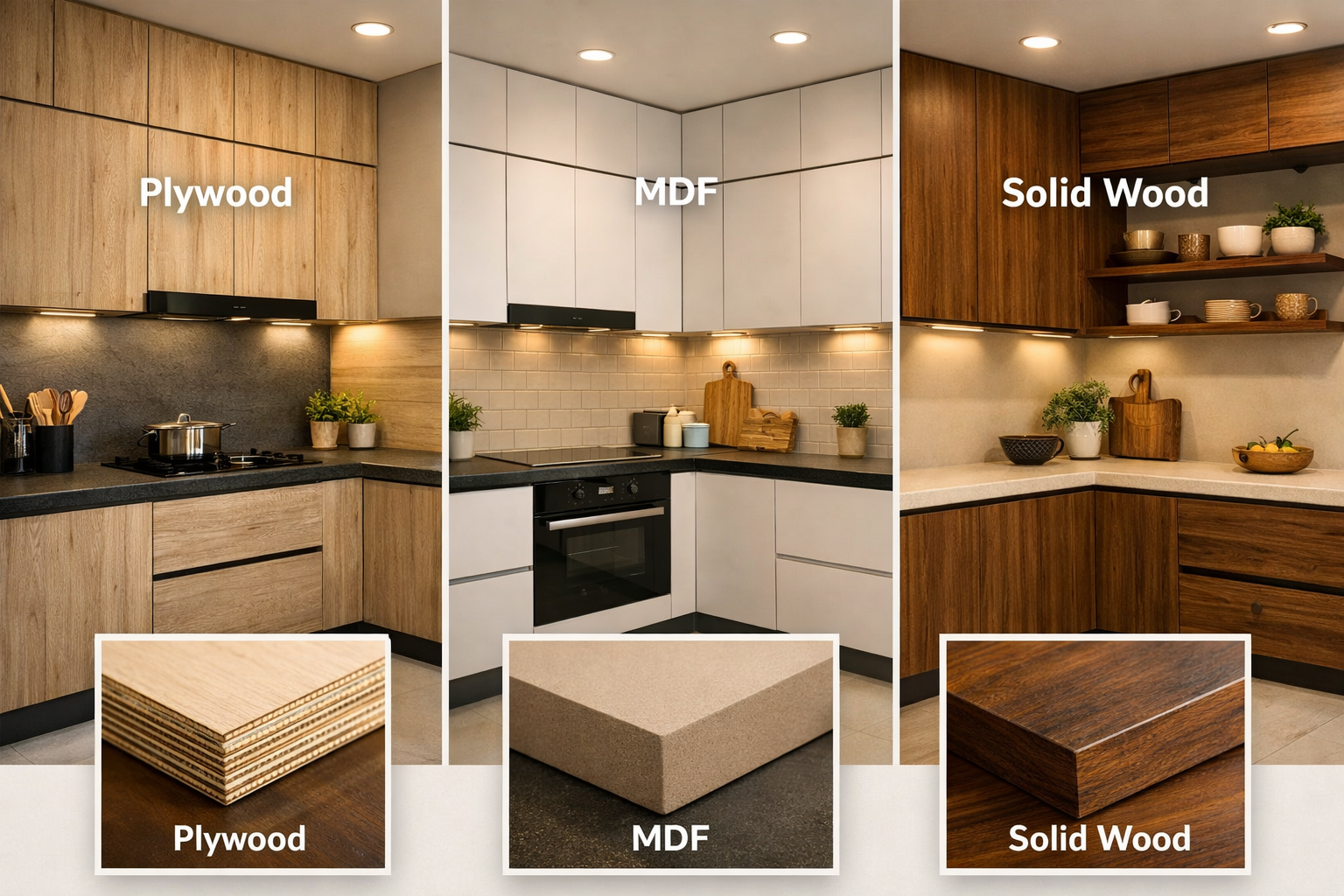
Plywood is one of the most widely used materials for cabinets, especially in kitchens and wardrobes.
Advantages:
- Strong and durable
- Moisture-resistant (especially BWP grade)
- Long lifespan
- Holds screws and fittings well
Plywood cabinets are often paired with laminates, veneers, or acrylic finishes. Through 3D cabinet designs, you can compare finish options easily.
2. MDF (Medium Density Fiberboard)
MDF is popular for modern interiors where smooth finishes and design flexibility are required.
Advantages:
- Smooth surface for paint and polish
- Ideal for routed and designer shutters
- Budget-friendly
Limitations:
- Less moisture-resistant than plywood
- Not ideal for wet areas
3D designs help showcase MDF’s seamless finishes and decorative patterns before execution.
3. HDF (High Density Fiberboard)
HDF is denser and stronger than MDF, making it suitable for cabinet shutters.
Advantages:
- Higher strength than MDF
- Smooth and uniform finish
- Suitable for painted cabinets
HDF works well for sleek, modern interiors visualized through 3D design renders.
4. Particle Board
Particle board is an economical option often used in rental homes or temporary setups.
Advantages:
- Cost-effective
- Lightweight
Limitations:
- Low moisture resistance
- Shorter lifespan
3D interior planning helps determine whether particle board suits your lifestyle and usage needs.
5. Solid Wood
Solid wood offers a premium and timeless appeal.
Advantages:
- Natural and luxurious look
- High strength
- Long-lasting
Limitations:
- Expensive
- Prone to expansion and contraction
3D designs help balance solid wood aesthetics with modern layouts and finishes.
Choosing Cabinet Materials by Area
Kitchen Cabinets
- Best materials: BWP plywood, marine plywood
- Moisture and heat resistance are essential
- 3D kitchen designs help visualize workflow and material durability
Bedroom Wardrobes
- Best materials: Plywood, MDF, HDF
- Focus on storage optimization and finish quality
- 3D wardrobes show internal layouts clearly
Bathroom Vanities
- Best materials: Water-resistant plywood, PVC boards
- Avoid MDF and particle board
Living Room Storage
- Best materials: MDF, plywood, HDF
- Decorative finishes work well with 3D visualization
Role of 3D Interior Design in Material Selection
3D interior design transforms the way homeowners choose cabinet materials. It allows you to:
- Compare textures, colors, and finishes
- Understand cabinet proportions and scale
- Visualize lighting effects on materials
- Finalize designs confidently before manufacturing
This reduces errors, saves money, and ensures complete satisfaction.
Tips for Selecting the Right Cabinet Material
- Choose moisture-resistant boards for wet areas
- Prioritize durability over cost
- Select finishes based on daily usage
- Always combine good materials with quality hardware
- Use 3D designs to finalize before execution